Key takeaways
- Ozempic injection is approved by the Food and Drug Administration (FDA) for certain uses in people with type 2 diabetes. It can be prescribed off-label to help with weight loss, but it’s not approved for this use.
- Ozempic is given as a once-weekly injection under the skin, using prefilled disposable pens.
- Savings programs and coupons may be available to help lower the cost of Ozempic injections.
Ozempic (“oh-ZEM-pick”) is a brand-name prescription medication used to improve blood sugar management in adults with type 2 diabetes and to reduce heart disease and kidney risks in certain adults.
The active ingredient in Ozempic is semaglutide, which belongs to a class of drugs called glucagon-like peptide-1 receptor agonists, often referred to as GLP-1 RAs or simply “GLP-1s.”
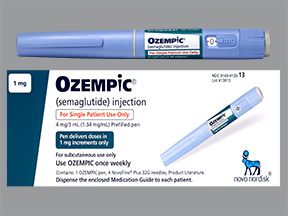
Ozempic comes as a liquid solution in prefilled pens for injection under your skin.
Note: In February 2026, Novo Nordisk (the manufacturer of Ozempic) announced it had received FDA approval for an oral tablet form of Ozempic as an alternative to Ozempic injections. The Ozempic pill is expected to be available in the United States in Q2 2026. This article focuses on the injectable form of Ozempic.
Specifically, Ozempic is approved by the Food and Drug Administration (FDA) for use to:
- help manage blood sugar levels in adults with type 2 diabetes, along with lifestyle improvements in diet and exercise
- lower the risk of certain heart or blood vessel problems — including heart attack and stroke — in adults who have both heart disease and diabetes
- lower the risk of kidney disease progression and heart-related death in adults with diabetes and chronic kidney disease (CKD).
Note: Doctors might prescribe Ozempic off-label for weight loss. However, the drug is not approved by the FDA for this purpose.
Ozempic works in several ways:
- It mimics the actions of a naturally produced hormone called GLP-1. By activating GLP-1 receptors in your brain, Ozempic helps stimulate the pancreas to release insulin.
- It slows the movement of food through your stomach. This makes you feel full for longer periods. In turn, it prevents a big increase in your blood sugar levels and can lead to fewer hunger cravings.
- It increases the amount of insulin your body makes after a meal so that your blood sugar levels won’t get too high. Insulin is a hormone that lowers your blood sugar levels.
The most common side effects, reported in at least 5% of people being treated with Ozempic in clinical trials of the drug, were:
- nausea
- vomiting
- diarrhea
- abdominal pain
- constipation
These side effects were typically mild and became less bothersome with time.
Ozempic can also cause less common or rare but serious side effects, including:
- low blood sugar
- gallbladder disease
- severe nausea
- pancreatitis
It can also worsen diabetic retinopathy in people who already have this diabetes-related eye problem.
These lists do not include all potential side effects of Ozempic. For more details, see Ozempic’s prescribing information.
The typical dosage of Ozempic is 0.25 milligrams (mg) injected once per week. After 4 weeks, you can increase the dosage to 0.5 mg injections once weekly.
Your doctor will recommend the Ozempic dosage that’s right for you. Always take the dosage your doctor prescribes.
Your doctor will explain how to use Ozempic. They’ll also explain how much to take and how often to inject it. Be sure to follow your doctor’s instructions.
Taking Ozempic
Ozempic comes as a liquid solution inside prefilled, disposable pens.
You’ll be able to inject doses of Ozempic yourself. Your doctor or pharmacist can show you how to do this when you first start treatment.
Ozempic injections are given under the skin in your thigh, abdomen, or upper arm. Be sure to rotate the injection site each time you take the medication. You should also use a new needle for each injection. This will help you avoid infections.
Ask your doctor for suggestions to help you feel comfortable and confident managing your injections. Be sure to follow their instructions.
This list contains a few tips you should follow:
- Wash your hands with soap and water before starting.
- Have all your supplies ready, including your Ozempic dose.
- Change the needle every time you use the Ozempic pen.
- Check the pen to ensure the medication inside is clear and colorless.
- Double-check that the dose is correct on your pen before giving your injection.
- Keep track of your doses and make sure you have a full dose left in your pen after each injection.
- Do not share your pen with anyone else.
- Record the date that your Ozempic prefilled pens should be discarded. (They expire 56 days after opening.)
For instructions on using Ozempic, see the manufacturer’s website. Or ask your doctor or pharmacist to show you how to use Ozempic pens.
Taking Ozempic with other drugs
Your doctor may prescribe Ozempic with other medications to help manage your blood sugar levels or lower your risk of cardiovascular problems. For details about taking other drugs with Ozempic, talk with your doctor.
Whether you have health insurance or not, cost may be a factor when you’re considering Ozempic. What you’ll pay for Ozempic may depend on several things, such as your treatment plan and the pharmacy you use.
Here are a few things to consider regarding cost:
- Drug coupons: You may be able to find drug coupons on prescription discount websites that can reduce the cost of your medication. These coupons cannot be used with insurance copays or benefits, but the discounted price may be lower than what you would pay through insurance.
- Savings program: Savings programs may be available to help reduce the price of Ozempic. If you have questions about how to pay for your prescription, talk with your doctor or pharmacist.
You can refer to this article for details about the cost of Ozempic.
Ozempic is not approved by the FDA for use as a weight management medication. But you might lose weight while you’re taking Ozempic. That’s because the medication decreases your appetite.
In some cases, Ozempic is prescribed off-label for weight management, though this isn’t likely. (With off-label use, a drug that’s approved for certain conditions is prescribed for another purpose.) It’s more likely that your doctor would prescribe Wegovy, which contains the same active ingredient as Ozempic, called semaglutide. (An active ingredient is what makes a drug work.) Wegovy is FDA approved to be prescribed for weight management.
Insurance may not cover off-label uses of Ozempic. Ask your doctor for more information.
If you’re interested in using semaglutide for weight management, talk with your doctor. They can help determine the best medication for you and whether it’s appropriate to prescribe Ozempic off-label.
How Ozempic may lead to weight loss
Ozempic may lead to weight loss because:
- It slows the rate at which your stomach empties after eating. This slows your digestion process and can help you feel fuller for longer.
- The drug mimics a hormone called GLP-1 that your body naturally produces. This hormone increases feelings of satiety (feeling full or satisfied after eating).
These effects can also decrease your appetite.
Is Ozempic safe and effective for weight loss? How much weight could I lose with Ozempic?
As long as you use Ozempic as your doctor prescribes, it should be safe for weight loss. However, the drug is not approved by the FDA for this purpose.
The amount of weight you might lose during Ozempic treatment depends on various factors, including how long you use Ozempic and your diet and exercise routine. It also depends on how your body responds to the drug.
For more information about Ozempic’s effectiveness for weight loss, talk with your doctor. They can discuss Ozempic’s studies in more detail and how your lifestyle might affect your weight management treatment. You can also check out this article about how Ozempic is used for weight loss.
Before starting Ozempic, talk with your doctor about all the benefits and risks of using it. You should also discuss your overall health and any health conditions you may have.
Ask your doctor if Ozempic is safe for you to take if you:
- have a family history of thyroid cancer
- have problems with your pancreas
- have problems with your kidneys
- have diabetic retinopathy
- are pregnant or plan to become pregnant
- are breastfeeding
Interactions
Using medications, vaccines, foods, and other substances that contain a certain drug can affect how the drug works. These effects are called interactions.
Interactions can increase or decrease the effects of medications taken together.
Before taking Ozempic, be sure to tell your doctor about all medications you take (including prescription and over-the-counter types). Also, describe any vitamins, herbs, or supplements you use. Your doctor or pharmacist can tell you about any interactions these items may cause with Ozempic.
In addition to the following information, you can also refer to this article on Ozempic’s interactions for more details.
Interactions with drugs or supplements
Ozempic can interact with several types of drugs. This list does not contain all types of drugs that may interact with Ozempic. Your doctor or pharmacist can tell you more about these interactions and any others that may occur while using Ozempic.
If you take Ozempic with other diabetes medications that also lower blood sugar levels, your blood sugar levels might drop too low. This can be dangerous.
Some diabetes medications can increase your insulin levels if taken with Ozempic. In turn, this can lead to low blood sugar. These medications include:
Note: It’s important to regularly monitor your sugar levels according to your doctor’s advice. Doing so will help you recognize when your blood sugar levels are high (hyperglycemia) or low (hypoglycemia). Talk with your doctor about what to do if your blood sugar levels are either too high or too low.
Foods to avoid with Ozempic
You don’t need to avoid any particular foods while you’re using Ozempic. There aren’t any foods that are known to interact with this drug. And Ozempic doses can be taken with or without food.
Other interactions
Certain herbs and other natural supplements can interact with Ozempic, leading to a drop in your blood sugar levels. Some examples include:
- bitter melon
- chromium
- gymnema
If you’re taking any herbs or supplements, talk with your doctor about whether they’re safe to take with Ozempic.
Ozempic and alcohol
You should avoid drinking large amounts of alcohol with Ozempic. Large amounts of alcohol can affect your blood sugar level. This can also:
- affect your liver function
- cause dehydration
If you drink alcohol, ask your doctor for more information about the risks of drinking alcohol while you’re taking Ozempic.
Pregnancy and breastfeeding
If you can become pregnant or are breastfeeding, it’s important to consider whether Ozempic is a safe choice for you.
Ozempic has several warnings, including a boxed warning. A boxed warning is the most serious warning issued by the FDA about potential drug-related dangers.
Boxed warning
Ozempic has a boxed warning for the risk of thyroid cancer.
Ozempic has been shown to cause thyroid tumors and thyroid cancer in animals. It is not known whether Ozempic can cause thyroid tumors or medullary thyroid cancer in humans.
If you have a family or personal history of medullary thyroid cancer or a rare condition called multiple endocrine neoplasia syndrome type 2 (MEN2), you should not take Ozempic.
Talk with your doctor if you have either of these conditions or a family history of them. Be sure to call your doctor immediately if you have any signs or symptoms of a thyroid tumor while taking Ozempic.
Symptoms of a thyroid tumor include:
- a lump on your neck
- long-lasting hoarseness in your voice
- shortness of breath
- trouble swallowing
Other warnings
Ozempic may not be right for you if you have certain medical conditions or other factors that affect your health. Talk with your doctor about your medical history before taking Ozempic. Factors to consider include:
- Kidney damage: Ozempic may cause severe dehydration as a complication of nausea, vomiting, and diarrhea during treatment. In some cases, this dehydration may lead to acute kidney damage. During treatment with Ozempic, be sure to tell your doctor about any digestive side effects you experience. Your doctor will monitor your condition for signs of dehydration or kidney injury, especially after any dosage changes.
- Pancreatic disease: Ozempic can cause pancreatitis. If you have pancreatitis or a history of pancreatitis, be sure to discuss this with your doctor. Ozempic has not been studied in people with pancreatic disease. Your doctor can help determine whether Ozempic treatment is right for you.
- Gallbladder disease: Ozempic can cause gallbladder problems, including gallstones and gallbladder inflammation (cholecystitis). If you have a history of gallbladder problems, be sure to talk with your doctor before starting Ozempic treatment. Symptoms of a gallbladder problem include upper abdominal pain, fever, jaundice, and clay-colored stool.
- Diabetes-related eye problems: If you’ve had diabetic retinopathy in the past, Ozempic may worsen this condition. Be sure to talk about this with your doctor before starting Ozempic treatment.
- Allergic reaction: If you’ve had an allergic reaction to Ozempic or any of its ingredients, your doctor will not prescribe Ozempic for you. Ask your doctor about other medications that may be better options for you.
- Taking Ozempic with insulin or insulin-increasing drugs: If you’re taking Ozempic along with insulin or drugs that increase how much insulin your body makes, your risk of hypoglycemia increases. (See “Interactions with drugs or supplements” for examples.) Hypoglycemia can be severe. Before you start Ozempic treatment, talk with your doctor about all of the medications you take. If you develop signs of hypoglycemia after using Ozempic (such as headache, drowsiness, or hunger), talk with your doctor. They may adjust the doses of the other drugs you’re taking.
- Slow digestion: Ozempic and diabetes can both cause a condition called gastroparesis (delayed stomach emptying). This condition slows the movement of food through your digestive system. If you already have gastroparesis, using Ozempic may increase the risk of serious complications from the condition. Your doctor may not prescribe Ozempic if you have a history of severe gastroparesis.
- General anesthesia and deep sedation: Be sure to tell your doctor if you have an upcoming medical procedure that requires either. There have been reports of aspiration in people who were sedated during treatment with Ozempic or similar drugs. This is because Ozempic slows digestion, allowing food to stay in your stomach longer. Due to the risk of aspiration, you may need to avoid eating for longer than usual before a planned surgery.
Ozempic starts working 1 to 3 days after it’s injected. After you start treatment with Ozempic, it may take 4 to 8 weeks for you to notice a difference and feel the full benefit.
After at least 4 weeks on your current Ozempic dose, your doctor may increase it. Your dosage adjustment will depend on your current dosage and how well it’s working for you. It’s important to follow your doctor’s advice on the dose of Ozempic you should take and take it exactly as directed.
If Ozempic works well for your condition, your doctor may have you take the medication long term. Ask your doctor about the benefits and risks of using Ozempic long term, including its side effects.
If you miss a dose of Ozempic, inject the drug as soon as you remember. But only do this if it’s within 5 days of your last dose. If it’s been more than 5 days, skip the missed dose and wait until your next scheduled dose.
Taking two doses too close together could lead to dangerously low blood sugar levels.
Do not take more Ozempic than your doctor prescribes. Doing so can lead to serious side effects.
Because Ozempic is injected once weekly, the effects of an overdose may last for a while. If you take too much Ozempic, your doctor will need to monitor you closely and treat your symptoms until they’ve resolved.
Symptoms of overdose
Ozempic overdose can cause:
- severe low blood sugar levels (also called diabetic shock or hypoglycemic shock)
- severe nausea
- severe vomiting
What to do in case you take too much Ozempic
Call your doctor if you think you’ve taken too much Ozempic. You can also call 800-222-1222 to reach America’s Poison Centers, or you can use its online resource. But if you have severe symptoms, call 911 (or your local emergency number) or go to the nearest emergency room immediately.
Ozempic (semaglutide) is a weekly injection used to help adults with type 2 diabetes manage their blood sugar and protect their heart. While many people use it off-label for weight loss, it is officially approved to lower the risk of heart attack and stroke. Most people experience mild side effects like nausea or stomach pain, but serious risks like pancreatitis can occur. Talk with your doctor about the right dosage for you and check for insurance coverage or coupons to help manage the cost of your prescription.
Disclaimer: While Healthline strives for factual, comprehensive, and current information, this article is not a substitute for a licensed healthcare professional’s expertise. Always consult a doctor before taking or discontinuing any medication. Drug information is subject to change and may not cover all uses, directions, precautions, warnings, interactions, reactions, or adverse effects. The lack of a warning does not guarantee a drug’s safety, effectiveness, or appropriateness for all patients or specific uses. Learn more about our approach to content integrity.