














The Fast Facts
- Our editors tested 8 teeth whitening products and methods — 3 impressed us, 3 came close.
- We ruled out coconut oil (not effective as a teeth whitener) and LED kits (more expensive without significantly better results).
- We found Crest 3D Glamorous White Strips the best for delivering dramatic results, while Hismile and Lumineux are peroxide-free whitening strips with varying, more subtle transformations.
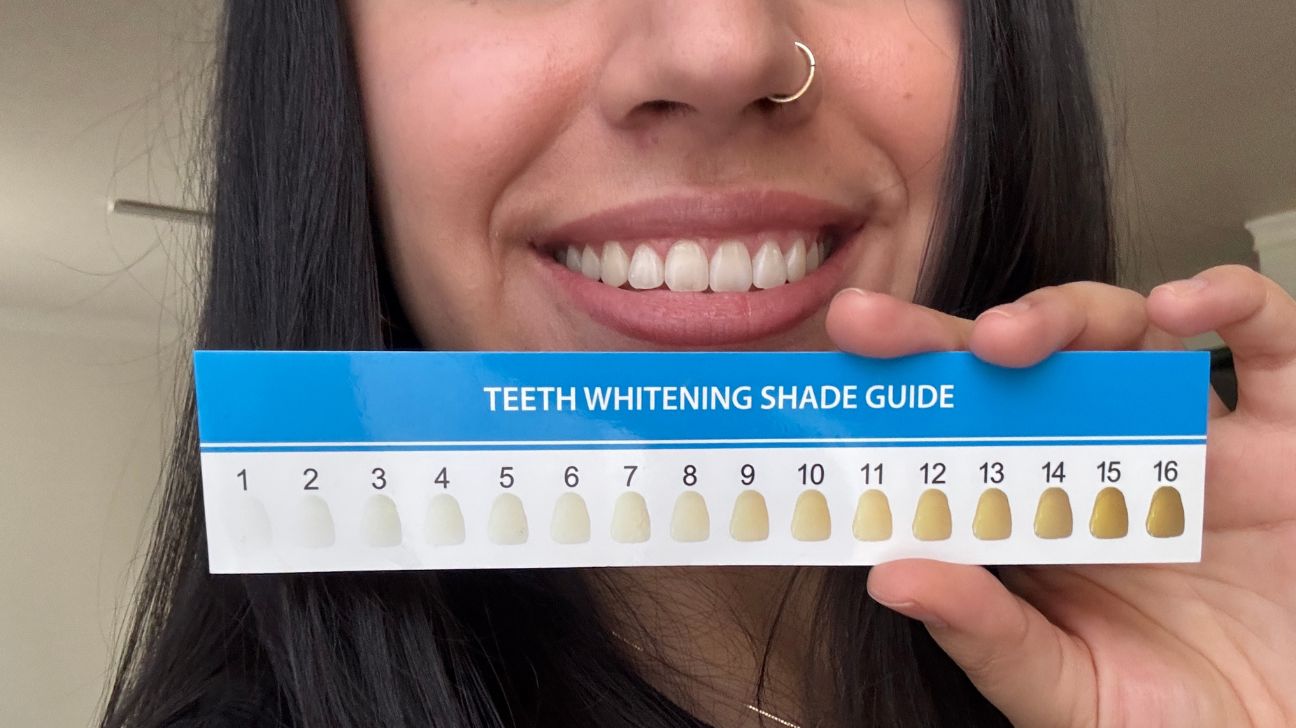
- Best strips for classic, dramatic whitening: Crest 3D White Glamorous White Whitestrips | Skip to review
- Like a professional clean, but lacked dramatic whitening: Made by Dentists Teeth Whitening Powder | Skip to review
At-home teeth whitening products typically don’t deliver results as dramatic as professional in-office treatments, but well-chosen over-the-counter (OTC) options may still noticeably improve the appearance of discolored or yellowed teeth.
To see which products live up to the hype, our team tested a range of whitening strips, gels, and powders from brands claiming to be the best.
Testers considered improvements in shade, stain removal, speed of results, ease of application, sensitivity, and overall value. Here’s what happened.
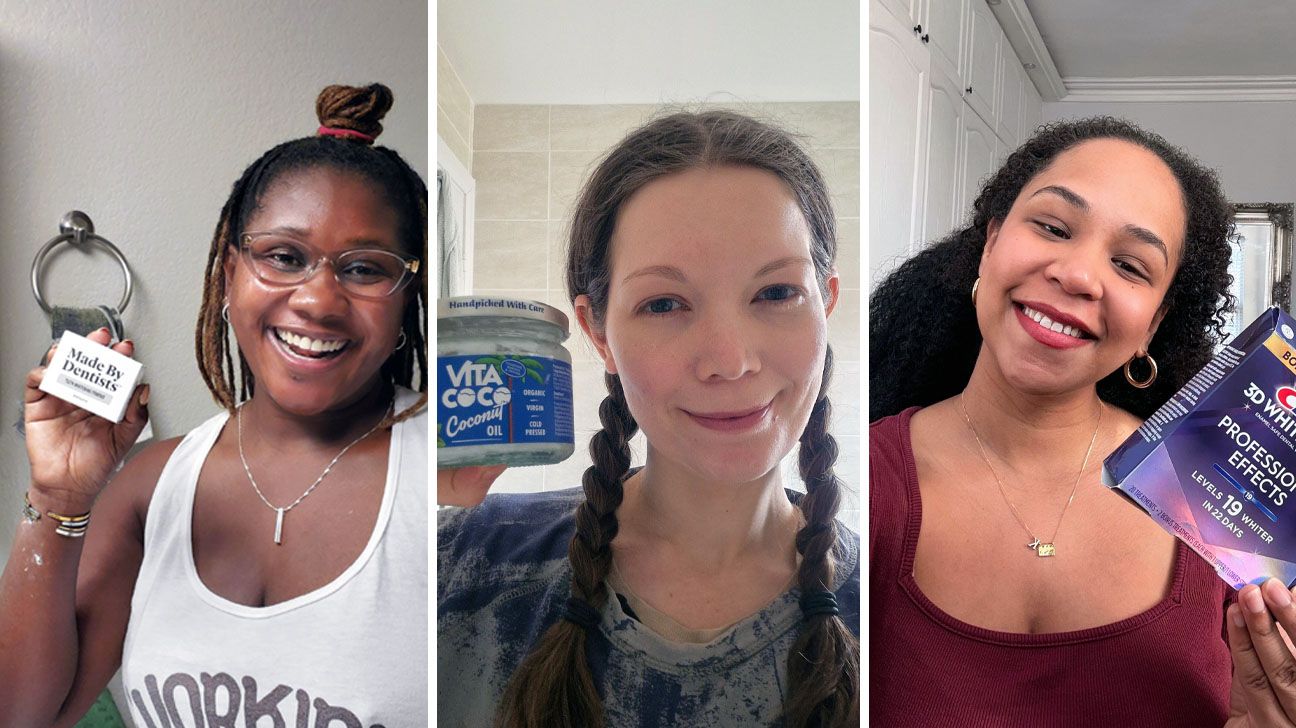
Some other peroxide-free whitening strips we tried impressed us. Testers deemed them best for more subtle whitening needs — effective but less dramatic. Hismile in particular is best for temporary, day-of whitening. They are effective, but the results don’t last.
Other teeth whitening methods, like the Made By Dentists powder, had little to no whitening effect, but did offer other benefits, such as a superb sense of cleanliness.
We also tested an LED teeth whitening kit. After researching and testing, we concluded that these tend to be more uncomfortable and more difficult to use. Meanwhile, the whitening effects aren’t superior enough to justify the extra effort. They are also significantly more expensive. So we left them off our list.
Some people use coconut oil for oil pulling, which involves swishing the oil around the mouth like mouthwash, but there is limited evidence that it whitens teeth. Our tester also did not find it effective. The Lumineux whitening strips were a more effective natural option.
There are many safe and effective products you can use at home to whiten your teeth. Here are some things to consider when shopping for teeth whitening products.
| Type | About | Pros | Cons |
|---|---|---|---|
| Whitening mouthwashes & rinses | Many whitening mouthwashes contain the same active ingredient as whitening strips — hydrogen peroxide. It may take 3 months to see a whitening effect. | • good for sensitive teeth • won’t harm gums or oral tissue • budget-friendly | • may take several months for results • only removes surface stains • can be used by multiple people within a household |
| Teeth whitening gels | Teeth whitening gels contain the same active ingredients as whitening strips. They’re available in several forms, including pre-filled trays, brush-on gels, and teeth whitening pens. | • pens are easy to use on the go • available in multiple forms • easy to find in stores and online | • don’t whiten as well as strips • pre-filled trays can be uncomfortable • may be uncomfortable for sensitive teeth and gums |
| Teeth whitening strips | The active ingredients in whitening strips vary, but many use carbamide peroxide or hydrogen peroxide adhered to a pliable, plastic strip. Whitening strips bleach surface stains and penetrate tooth enamel and dentin to remove intrinsic stains from deep within the tooth. | • easy to use • less expensive than in-office dental procedures | • If not used correctly, they can be harmful to your teeth |
| Whitening toothpastes | Whitening toothpastes usually contain abrasives that help scrub off surface stains, and active ingredients that lighten teeth by several shades. For best results, brush your teeth at least twice a day for around 2 minutes and use proper brushing techniques. | • easy to use daily • affordable | • take longer to work • can lead to tooth sensitivity |
| LED whitening kits | LED on its own doesn’t whiten teeth. When an LED is added to a whitening kit, it accelerates the whitening process by boosting the chemical reactions triggered by whiteners like hydrogen peroxide. | • results vary, but people report whiter teeth • less expensive than professional whitening • does not require the use of UV radiation | • overuse can damage teeth • tooth and gum sensitivity are common • can burn the tongue or gums during treatment |
It’s important to note that teeth whitening products aren’t meant for use by children. It may also be wise to consult your dentist before using whitening products, as some ingredients can be harmful to your teeth.
Most whitening products use hydrogen or carbamide peroxide to whiten teeth. These substances work by penetrating tooth enamel to reach the inner layer of dentin. Within the dentin layer, they oxidize and lighten stains by breaking down the deeply pigmented molecules that give teeth a darker appearance.
Light therapy in whitening kits doesn’t add whitening power. Rather, it quickens oxidation, so you get more dramatic results in a shorter period of time.
When used as directed, teeth whitening products from trusted manufacturers, such as the ones on this list, are considered safe for teeth and gums.
It’s important to follow the directions for teeth whitening products, including how often to use them. According to the American Dental Association (ADA), it’s possible to overuse over-the-counter teeth whitening products. Overuse has been shown to damage the enamel and gums, cause tooth sensitivity, and lead to translucent teeth.
Teeth whitening products may reduce significant yellowing, but results will vary from person to person. The cause, extent, and severity of staining are all important variables to consider.
If your teeth are very yellow or strongly discolored, talk with your dentist about viable solutions that will be best for you. These may include whitening products or professional treatments.
The length of time teeth whitening will last depends on the product. Some whitening strips can keep teeth white for 6 months or longer. You may have less dramatic results with whitening toothpastes.
Your teeth can have both intrinsic and extrinsic stains. Extrinsic stains are caused by things in your environment that come into contact with your teeth. These include foods and drinks that contain tannins (such as red wine), beer, coffee, and tea. Colas and cigarette smoke also cause extrinsic stains.
Intrinsic stains occur inside the tooth and can be seen on the outside. Certain types of medications, illnesses, aging, tooth trauma, and infections can cause this type of staining. Excessive fluoride exposure during tooth development in childhood can also cause this.
From our testing, peroxide-based whitening strips from brands like Burst and Crest generally produced the most noticeable improvements in tooth brightness. One tester also found Bite Whitening Gel effective in gradually enhancing the appearance of their smile over a two-week period.
By contrast, alternatives such as coconut oil pulling and Made By Dentists whitening powder did not produce visible whitening results in testing. However, they may still support oral hygiene, leaving teeth feeling cleaner and more polished, and can be considered gentler, more natural options within a broader oral care routine.