














A gum boil is an abscess that develops on the gums. It appears as a swollen bump and is mainly caused by a bacterial infection beneath the gum surface.
A gum boil is a swollen, pus-filled bump on the gums that usually develops because of a bacterial infection. Also called a gum abscess, a gum boil can be painful and may cause swelling, sensitivity, and a bad taste in the mouth if it begins to drain.
Although most gum boils are caused by issues such as tooth decay, gum disease, or trapped food particles, they shouldn’t be ignored, as untreated infections can spread to surrounding tissues and, in rare cases, to other parts of the body.
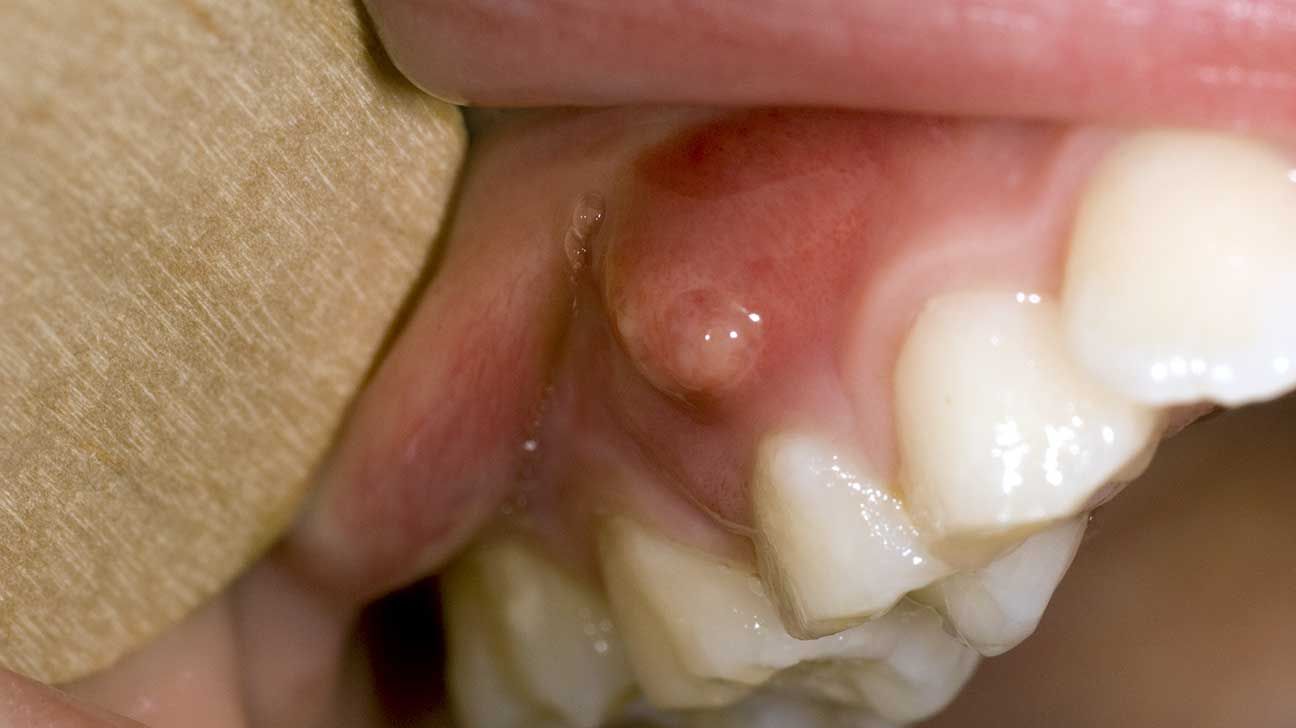
An abscess on the gums is often called a gum boil. They appear as swollen bumps on the gum.
The main cause of a gum boil is bacteria, often from plaque, food particles, or tooth decay, which can lead to an infection beneath the gum surface. Rarely, a gum boil is a symptom of oral cancer.
The type of gum boil depends on both its location and the underlying cause of the infection.
It may be classified as:
- Gingival abscess: occurs in the gum tissue, usually along the gum line
- Periapical abscess: develops at the root of a tooth, often because of tooth decay or damage to the tooth
- Periodontal abscess: forms in the tissues that support the teeth, often due to advanced gum disease
Gum boils are often caused by bacterial infections related to tooth decay, gum disease, dental trauma, or other factors that allow bacteria to enter the tissues. Poor oral hygiene and ill-fitting dentures may also increase the risk of developing a gum boil.
Although some gum boils aren’t painful, most are. Gum pain is typically the first sign of a gum boil.
After experiencing pain, you might probe the area with your tongue or look in your mouth using a mirror and find a bump on your gum.
Other symptoms of gum boils can include:
- bad breath
- bleeding
- pus discharge
- an earache
- swollen gums
- sensitivity to hot or cold
- nausea
- a fever
In many cases, a gum boil results from poor dental hygiene. Maintaining good oral health is the best way to prevent gum boils.
If you already have one, your doctor may recommend taking antibiotics to resolve the infection. This is often prescribed in conjunction with:
- a deep cleaning by a dentist or dental hygienist if the cause is unhealthy gums
- a root canal by a dentist or an endodontist if the cause is tooth decay
- an adjustment to dentures by a dentist if the cause is poorly fitting dentures
Some home remedies may help temporarily relieve symptoms, such as discomfort or swelling, from a gum boil. However, these approaches may not address the underlying cause of the infection.
Depending on what’s causing the gum boil, the infection may not fully resolve until it’s treated by a dentist. Practitioners of natural healing recommend home remedies such as:
- gargling with salt water
- rinsing the mouth with hydrogen peroxide mouthwash (equal parts 3% hydrogen peroxide and water)
- rinsing the mouth with garlic juice
- applying clove oil to the affected area
- applying tea tree oil to the affected area
- applying a paste to the affected area made from:
- 1/2 teaspoon mustard oil
- 1 teaspoon turmeric powder
- 1/2 teaspoon Kosher salt
A gum boil is an abscess caused by a bacterial infection. If left untreated, the infection can spread to nearby tissues, the bones, or, in rare cases, the bloodstream and become serious or even life threatening.
Preventing gum boils through good oral hygiene practices is the best defense. If you think you have a gum boil, make an appointment with a dentist as soon as possible.
A dentist can determine whether your symptoms are caused by a gum boil and recommend treatment to address the infection before it worsens or spreads. In rare cases, they can also rule out more serious causes, such as oral cancer.