














Key takeaways
- Transthyretin amyloid cardiomyopathy (ATTR-CM) happens when misshapen TTR proteins form amyloid deposits that stiffen your heart’s walls, making it harder for your left ventricle to fill with blood.
- Heart-healthy habits like eating foods low in saturated fats and sodium, staying physically active with low impact exercise, and prioritizing quality sleep may help your heart stay stronger longer.
- Pacing yourself during activity can help you stay active safely. Rest when you’re tired, break activities into smaller chunks, and exercise at an intensity level that allows you to talk comfortably.
Transthyretin amyloid cardiomyopathy (ATTR-CM) occurs when the transthyretin (TTR) protein changes shape and builds up in your heart and sometimes your nerves.
Your liver produces TTR to carry essential hormones and nutrients throughout your body via your bloodstream. But when the protein is misshapen, it can form clusters called amyloid deposits, in a process known as amyloidosis.
These deposits affect how your heart works and can cause swelling, chest congestion, and fatigue. Some people also
As ATTR-CM progresses, amyloid deposits cause your heart’s walls to stiffen, and your left ventricle has difficulty filling with blood during each heartbeat. Eventually, this condition can lead to heart failure.
Healthy habits can ease the strain on your heart and reduce the effects of ATTR-CM symptoms. These self-care strategies can’t stop deposits from building up in your heart, but they may help your heart stay stronger longer.
A heart-healthy diet can
Try incorporating these heart-friendly food choices into your meals:
- Foods low in saturated fats: Cut back on butter, cheese, and fried foods. Consider swapping in foods such as avocado, hummus, and applesauce.
- Foods low in sodium: Limit added salt. Instead, consider using fresh herbs like basil or parsley to add flavor to your meals.
- Foods and drinks low in sugar: Reduce your consumption of sweets and sugary drinks. You may want to try an artificial sweetener in your coffee or tea and choose fresh fruits over pastries or cakes.
- Add plenty of vegetables: Fill your plate with a variety of vegetables. Swap potatoes for zucchini, cauliflower, and butternut squash, and add more leafy greens.
- Add lean protein: Choose proteins such as fish, tofu, lentils, and chickpeas. Limit red meat.
- Add whole grains: Replace white rice and white bread with quinoa, brown rice, and whole wheat bread.
You also need to monitor your fluid intake. If you notice swelling, talk with your doctor about adjusting your fluid intake to avoid dehydration. A registered dietitian can also help you create a plan that works for you.
Physical activity
ATTR-CM can cause shortness of breath, which may make exercise more challenging as the condition progresses. This condition can also affect your heart rate and blood pressure during activity.
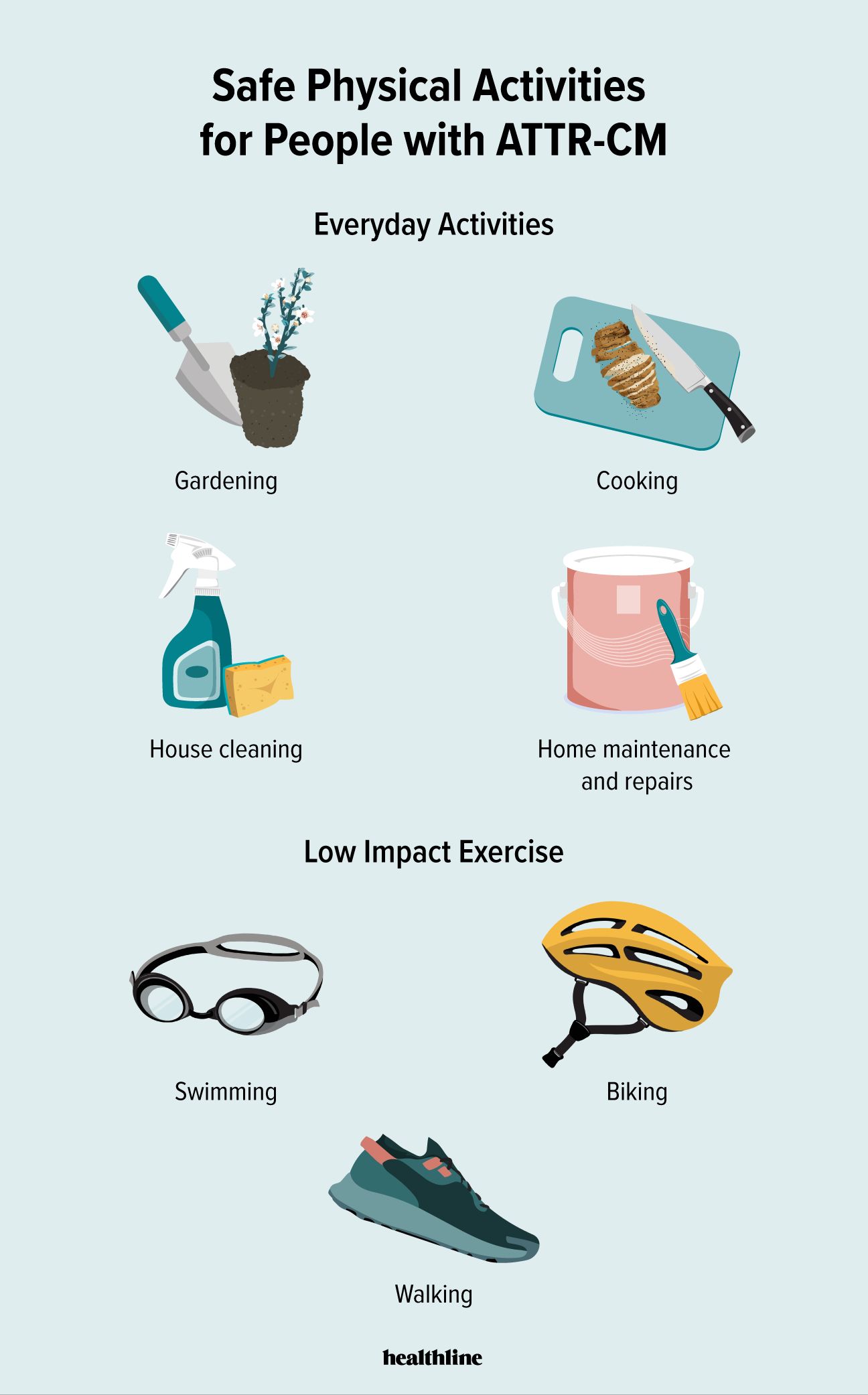
But you can still benefit from movement while keeping safety in mind. Try adding everyday activities such as:
- gardening
- cooking
- house cleaning
- house maintenance and repairs
You might also enjoy low impact forms of exercise like:
- swimming
- biking
- walking
Pacing yourself can help you stay active while living with ATTR-CM. Rest when you feel tired, since overexertion may leave you feeling unwell for a while.
Breaking an activity into smaller chunks throughout the day can also help. For example, try walking or biking three times per day for 5 to 10 minutes each. A good general rule for judging the intensity of your activity is that you should still be able to talk comfortably while exercising.
Getting enough sleep is essential for heart health. Disrupted sleep or lack of sleep can
Sleep also supports the health of your nerves. ATTR-CM can cause neuropathy (nerve pain), which may make it harder for you to rest, and getting too little sleep can increase your sensitivity to pain. Quality sleep has close links to your autonomic nervous system, which influences both heart and nerve function.
Stress is one of the biggest barriers to getting a good night’s rest. You might want to try some
- taking deep breaths
- practicing meditation
- taking breaks from the news and social media
- writing in a journal
- spending time in nature
- doing a relaxing activity
- practicing yoga or tai chi
- connecting with loved ones
Smoking and heavy alcohol use can
Some over-the-counter medications may also affect your heart. For example, proton pump inhibitors (used for heartburn relief) have been linked to increased cardiovascular risk. Talk with a pharmacist or doctor to make sure any over-the-counter medications you may take are safe for you.
Having support can make living with ATTR-CM easier and help protect your overall health.
If you live with ATTR-CM, joining a support group can allow you to connect with people who understand your experience. The organization Amyloidosis Support Groups, managed by the Amyloidosis Foundation, offers information about support groups by state and other resources.
Caregivers often play an important role in the lives of people with ATTR-CM, helping with needs such as scheduling appointments and picking up medications, as well as contributing to daily tasks at home. The Family Caregiver Alliance offers tips and strategies to help caregivers look after their own health while caring for a loved one.
Transthyretin amyloid cardiomyopathy (ATTR-CM) is a progressive condition that can weaken your heart and nerves over time.
Healthy lifestyle strategies, such as eating a heart-healthy diet and staying active to the best of your ability, can help your heart stay stronger longer and help you maintain a good quality of life. A strong support system is also essential when you live with ATTR-CM.
Even small changes to your daily habits can make a meaningful difference in your health and your overall well-being.