














The Fast Facts
- Arthritis creams help relieve joint pain when applied to the skin.
- They can provide temporary, but effective, relief. These creams tend to work best on joints near the skin’s surface, such as those in the hands or knees.
- Various pain-relieving creams, lotions, and gels for arthritis are available, including Aspercreme and Tiger Balm.
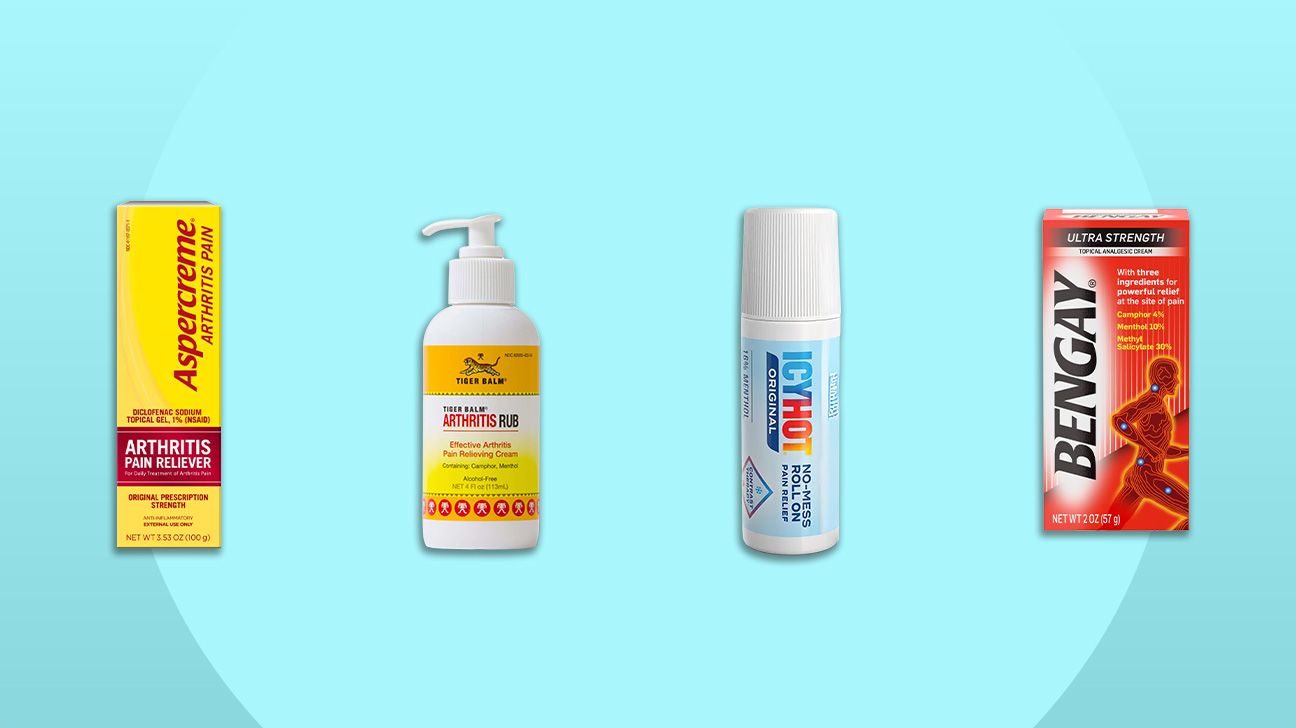
Swollen joints from arthritis can cause pain and limit your ability to move. If you have arthritis, you probably want as many pain relief options as possible.
You may already have tried oral over-the-counter (OTC) pain relievers, including nonsteroidal anti-inflammatory drugs (NSAIDs) such as ibuprofen. Another option is to try one of the many OTC topical creams that can help relieve arthritis pain.
Here’s the lowdown on these products to help you decide which arthritis cream might be best for you.
All products featured in this article have been carefully vetted and reviewed by our medical team according to strict standards. Assessment criteria include:
- Does the product include ingredients to relieve arthritis pain?
- Does the brand make unfounded medical claims?
- Does the product provide clear usage and safety guidelines?
- Are there positive customer reviews?
The main pain-relieving ingredients in arthritis creams are:
- Salicylates: Reduce inflammation (swelling and irritation), which helps decrease pressure and pain in the joints.
- Counterirritants: These warm or cool the skin, distracting the brain from pain. Some examples include menthol, camphor, eucalyptus oil, and cinnamon oil.
- Capsaicin: A natural, odor-free element found in hot chili peppers. It reduces pain by blocking the skin’s pain receptors.
Medical Perspective“Topical NSAIDs like diclofenac (Voltaren) are usually the best option since they actually reduce inflammation and can work about as well as pills for some joints, like the knees, with fewer side effects.
“Capsaicin creams can help over time, but often sting at first, while menthol-based creams mostly give short-term relief by distracting from pain. Lidocaine numbs the area and can help with localized pain, but it doesn’t treat inflammation and isn’t as well-supported for arthritis.
“A person should focus on what the cream actually does—anti-inflammatory ingredients tend to work best, especially for joints like hands and knees that are close to the skin. It’s also important to consider side effects, how often you’ll need to apply it, and any health conditions you have.”
— Debra Sullivan, PhD, MSN, RN, CNE, COI
Learn more about inflammation.
Quotes represent the opinions of our medical experts. All content is strictly informational and should not be considered medical advice.
Although arthritis creams are OTC products, you still need to use them properly. Follow these steps to help ensure your arthritis cream is safe and effective.
- Always follow the package directions when applying an arthritis cream.
- Wash your hands before and after you apply the cream. Never touch your eyes or mucus membranes when you have arthritis cream on your hands.
- Limit your use to four times per day, unless the package suggests otherwise.
- Do not use the products in this article with heating pads or under bandages.
- Stop using the cream if it causes irritation or if you notice your skin is sensitive to it.
- If you’re sensitive or allergic to aspirin, ask your doctor if you should avoid salicylates. You may also need to avoid them if you take prescription blood thinners.
- To prevent side effects, use salicylate creams only occasionally, unless your doctor tells you otherwise.
- If you are on any prescription medication, such as blood thinners, you should check with your doctor before using a NSAID topical cream.
It is important to remember that the Food and Drug Administration (FDA) does not evaluate or approve all OTC medications.
However, they must adhere to specific FDA policies and regulations to be eligible for sale.
There is no strong clinical evidence that bee venom cream effectively treats arthritis in humans.
A 2024 review reports that bee venom has anti-inflammatory and pain-modulating effects in laboratory and animal studies, and may influence pathways involved in arthritis. However, these findings are preclinical, and there is limited human research to support this.
Some people may experience temporary pain relief, but this is not proven to be a reliable or long-term treatment.
Early research suggests that topical CBD may help reduce arthritis-related inflammation and benefit nerve pain. However, most studies are small, and there is not enough strong clinical evidence to confirm consistent or significant benefits.
That said, some users report temporary relief, and CBD creams are often used alongside other pain management methods.
Read our full review of the best CBD creams for pain relief, where our testers found mixed but sometimes noticeable benefits.
With so many arthritis pain relief creams on the market, it can be hard to know which is right for you. Keep trying different products until you find one that you like.
If the over-the-counter pain relief creams you try aren’t strong enough for you, talk with your doctor about creating an arthritis management plan. This might include mobility exercises and stronger medications.
Medical Perspective“Creams aren’t the only option for pain relief—things like exercise, physical therapy, and weight management are key parts of managing arthritis long-term. You can also use oral medications, hot/cold therapy, TENS units, or try options like acupuncture depending on what works for you. For more severe cases, doctors may recommend injections or even surgery.”
— Debra Sullivan, PhD, MSN, RN, CNE, COI
Quotes represent the opinions of our medical experts. All content is strictly informational and should not be considered medical advice.