














The Fast Facts
- The best sunscreen for rosacea should contain ingredients suited to sensitive skin and have a high SPF.
- Being out in the sun is a common trigger for rosacea. If you have rosacea, you’ll need to take a few extra precautions when you pick out a sunscreen.
- Top options include CeraVe for wide availability and low cost, and EltaMD for acne and rosacea.
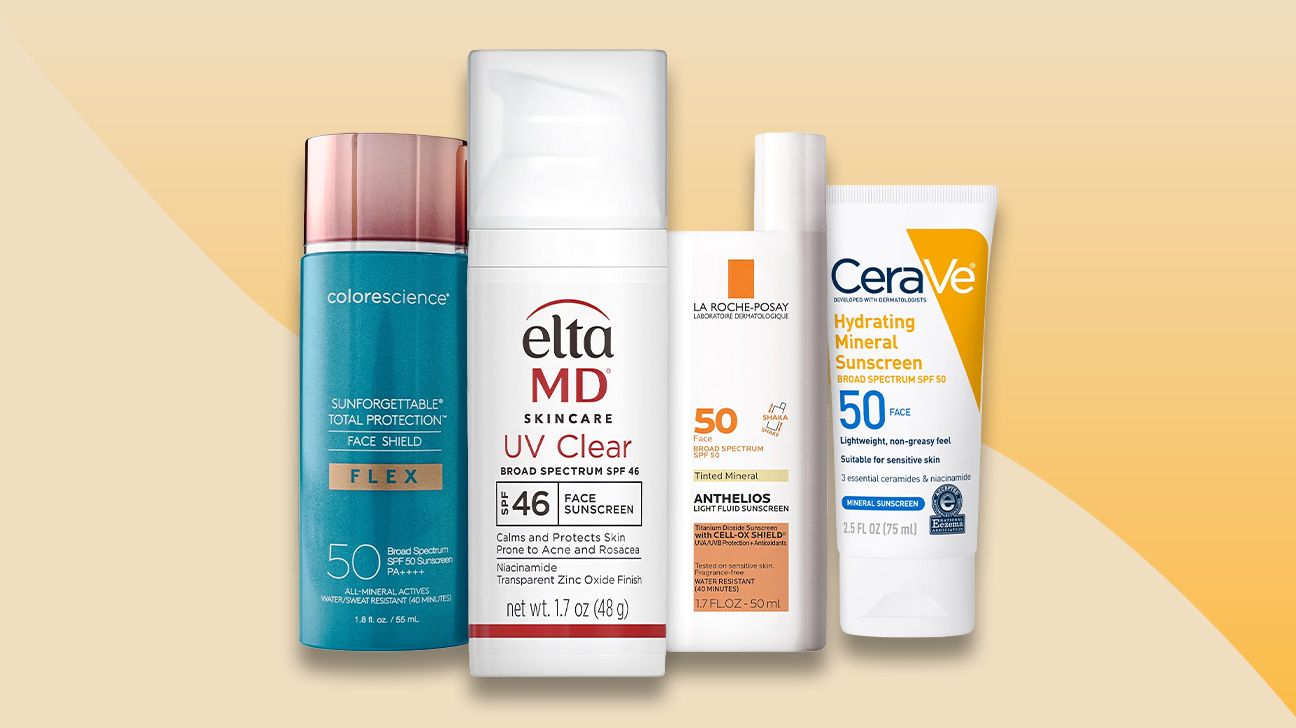
- Best under-makeup sunscreen for rosacea: La Roche-Posay Anthelios Ultra Light Sunscreen Fluid | Skip to review
- Best water resistant sunscreen for rosacea: Blue Lizard Sensitive Mineral Sunscreen | Skip to review
None of the above sunscreens contain any fragrances, alcohols, or other artificial ingredients known to cause rosacea flare-ups. They’re picked based on top consumer reviews. We shopped from trusted brands and included a good price range.
We also looked at other factors, such as:
- SPF: Does it provide broad-spectrum protection against both UVA and UVB rays? Is it SPF 30 or higher for maximum protection?
- Application. Does it apply quickly and easily? What kind of applicator does the product use? Will it work for both face and body?
- Water-resistance levels. Some sunscreens are not water-resistant, while others have a water-resistance range of 40 to 80 minutes before they need to be reapplied.
- Ingredients that gently help other skin concerns. Some options include a tint for evening out skin tone, and others include soothing ingredients and even antioxidants.
- Ingredients that may aggravate rosacea: Does it contain any artificial dyes, fragrances, or silicone?
- Product size. We point out size (when it matters). Some reviewers complain about bottle size. Some brands offer multiple sizes.
Here are some additional things to consider before buying any sunscreen:
- Prone to acne? Choose a sunscreen that contains ingredients that won’t irritate existing pimples or skin conditions, or ones that contain safe ingredients that can treat acne.
- Want a tinted moisturizer? Look for sunscreens that double as lotions and contain natural colors to help you achieve the color and look of your natural skin tone.
- Want your sunscreen to double as makeup? Choose a foundation, lip balm, or BB/CC cream that contains SPF and no ingredients that can irritate rosacea.
- Want to protect the planet? Choose a sunscreen that comes in an eco-friendly, biodegradable container. Even better, look for the B corp logo. This means that the manufacturer follows sustainable sourcing and fair business practices, such as paying suppliers and employees a living wage. You can also look for reef-safe sunscreens, which are the zinc oxide, titanium-based, and non-nano sunscreens.
Sun exposure is a
Using a sunscreen that contains certain chemical absorbers known to cause skin irritation can lead to rosacea flare-ups with aggressive symptoms.
People with rosacea often complain of stinging and burning in their faces and eyes after using certain creams and sunscreens. Some preservatives and fragrances in these products can cause a rosacea flare-up.
It’s important to find a sunscreen with sufficient UV protection and rosacea-friendly ingredients that aren’t harsh on your skin.
Learning the differences between mineral and chemical sunscreens, and the ingredients in both types, can help you establish a baseline for which sunscreens might be best for you. The two types aren’t really what they seem at first. This guide will help you remember how to choose between the two.
The Food and Drug Administration (FDA) has
- Category I: “GRASE,” which stands for generally recognized as safe and effective. Only titanium dioxide and zinc oxide are Category I.
- Category II: non-GRASE. Two ingredients are classified as Category II: para-aminobenzoic acid (PABA) and trolamine salicylate, which have been banned by the FDA.
- Category III: requires further evaluation. Category III ingredients include dioxybenzone, sulisobenzone, oxybenzone, avobenzone, cinoxate, octinoxate, octisalate, homosalate, padimate O, ensulizole, meradimate, and octocrylene. All these ingredients are being re-evaluated by the FDA due to systemic absorption, as well as not being reef-safe.
Physical (inorganic, or mineral) sunscreen
Also known as mineral sunscreen, this is the type of sunscreen you want if you’re looking to reduce rosacea flare-ups.
Mineral sunscreen is sometimes called “inorganic” because of its ingredients and the way it filters UV light. Nowadays, “organic” seems like a synonym for “good for you.” But that’s not the case with these sunscreen types if you have rosacea.
Mineral sunscreens are typically made with zinc oxide and titanium oxide. These ingredients, often in combination with other synthetic ingredients, act as a barrier to both UVA and UVB rays by reflecting and scattering them away from your skin.
Zinc oxide and titanium oxide are naturally occurring chemical compounds. Powdered zinc oxide used in physical sunscreen is made in a lab by electrocuting a solution that contains baking soda.
Keep in mind that tiny particles in mineral sunscreens
Also, some mineral sunscreens use other chemicals to make the solution easier to apply to your face. These may be irritating to your skin. Keep an eye out for extra ingredients besides zinc oxide and titanium oxide that may cause a rosacea flare-up, such as:
para-aminobenzoic acid (PABA) - padimate O
- “fragrance,” even if it’s labeled as “natural”
- alcohol
- 4-methylbenzylidene camphor
Chemical (organic) sunscreen
This category basically includes any sunscreens that don’t use zinc oxide or titanium oxide to shield your skin from UV rays. This includes numerous chemicals that absorb light before it can enter your skin rather than physically blocking the UV rays.
Don’t let the “organic” label mislead you — what the term refers to in this case is the chemical makeup of the main ingredients in the sunscreen.
While physical sunscreen blocks rays, chemical sunscreen sinks into your skin and reacts with UV rays that make contact with your skin. This results in a chemical process that converts UV rays into harmless byproducts, such as heat.
The chemical compounds used to achieve this effect are potential skin irritants for rosacea, including:
- oxybenzone
- octinoxate
- octisalate
- avobenzone
As there have been recent studies and an
Yes, sunscreen absolutely helps rosacea. Sun exposure is a common trigger for rosacea, so wearing proper sunscreen daily can prevent flare-ups and keep discoloration from worsening.
The best way to protect rosacea from the sun is to apply a broad-spectrum mineral sunscreen with SPF 30 or higher every day.
Try to find a sunscreen that’s free from chemicals, fragrances, and added dyes or preservatives. It’s also a good idea to take other protective measures, such as wearing a wide-brimmed hat or sun-protective clothing.
SPF may not eliminate existing discoloration from rosacea. Continuous flares increase redness and broken vessels, so wearing sunscreen daily can help prevent or reduce them.
A safe and gentle sunscreen formula, like those on our list, can help prevent redness from worsening and may help prevent flare-ups, since sun exposure is a trigger for rosacea.
Everyone should apply sunscreen every 2 hours. If you’re swimming, you may need to reapply more often, as even water-resistant formulas may need reapplication after 40 minutes or longer
Sunscreen is important for rosacea because it minimizes flare-ups due to sun exposure. Using the right type of sunscreen is important, because certain ingredients can be irritating to skin in people with rosacea.
Remember that zinc oxide and titanium oxide are key ingredients to a good, safe sunscreen for your rosacea. Chemical sunscreens can be irritating to your skin. Other ingredients, such as fragrance and alcohols, can also trigger flare-ups.
Talk with a dermatologist if you’d like more insight into your rosacea and your treatment options.