














The Fast Facts
- There are many types of hearing aids to choose from, including behind-the-ear (BTE) or in-the-ear (ITE) options, rechargeable units, or almost invisible hearing aids.
- We asked a medical expert what to consider when starting your search for hearing aids and how to choose between over-the-counter (OTC) or prescription options.
- Our top picks for the best hearing aids include the Signia Pure Charge&Go BCT IX for its 36-hour battery life, and the Jabra Enhance Select 700 as the best OTC option.
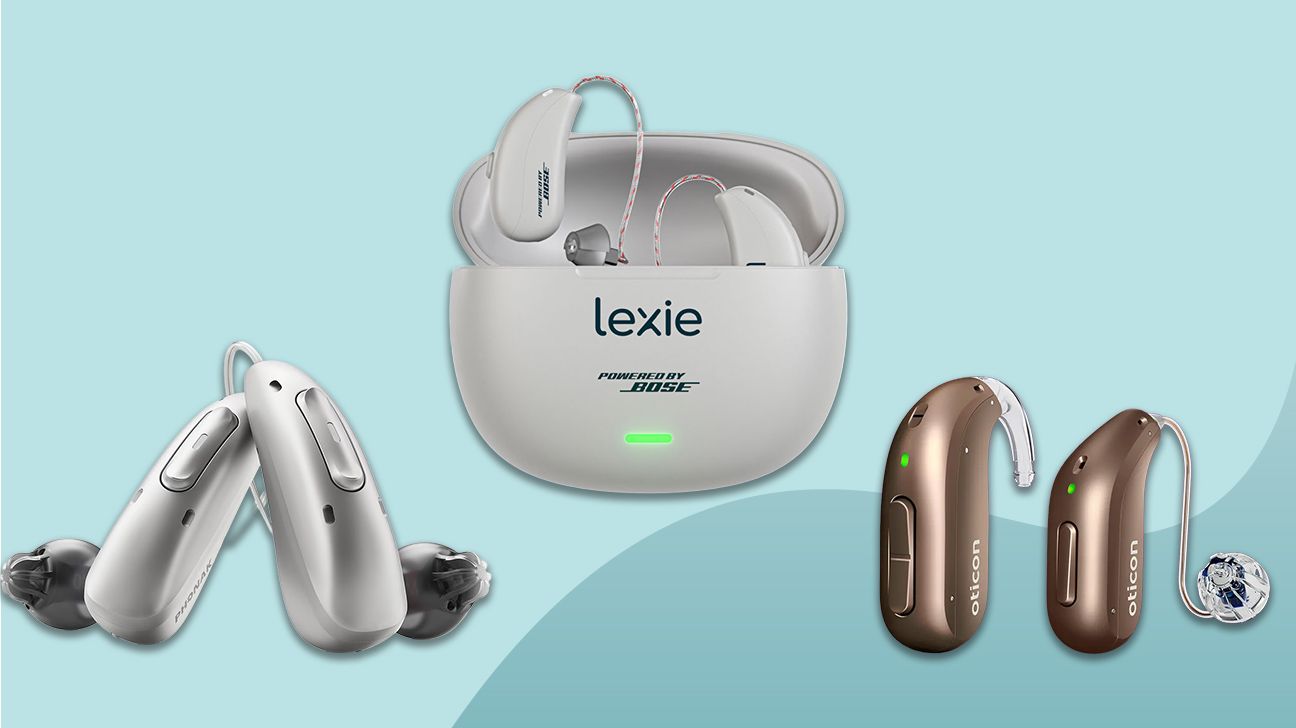
You have many options for hearing aids, from rechargeable, live-music-enhancing models to nearly invisible ones and those in your favorite color.
We explain the main features of hearing aids and how an audiologist can guide you to the right pair for your needs. Plus, we share our picks for prescription and over-the-counter (OTC) hearing aids offering the best quality for the price.
Style of hearing aids
Here are common acronyms for the five style types of hearing aids:
- Behind-the-ear (BTE): This type is worn behind or on top of the outer ear.
- In-the-ear (ITE): These are worn in the ear canal.
- Receiver-in-the-ear (RITE)/receiver-in-canal (RIC): The components are placed in and behind the ear.
- Invisible-in-the-canal (IIC): This type fits deeply inside the ear canal and is virtually invisible.
- Completely-in-the-canal (CIC): This is worn within the ear.
prescription
Pricing guide
Hearing aid prices can vary significantly from retailer to retailer and among OTC products — priced between a few hundred and a few thousand dollars — and prescription devices, which start around $2,000 and can cost up to $6,000 a pair.
Sometimes hearing aids are bundled with additional services, such as follow-up visits and hearing aid maintenance.
Numerous factors influence which hearing aids best suit your needs. Here are a few important ones to keep in mind.
Level of hearing loss
The American Academy of Audiology stresses the need for consumers to receive a comprehensive audiological assessment before buying hearing aids. This assessment also helps determine whether underlying factors, such as ototoxic medications or ear infections, may be causing your hearing loss.
Medical Perspective“Degree of hearing loss, type of hearing loss, and configuration of hearing loss all contribute to a final hearing care plan, including the recommendation of devices if appropriate.”
— Catherine Palmer, PhD, director of audiology at the University of Pittsburgh Medical Center
Learn more about types of hearing loss and treatment.
Quotes represent the opinions of our medical experts. All content is strictly informational and should not be considered medical advice.
Prescription vs. OTC hearing aids
Prescription hearing aids include customization for your specific hearing needs and ear shape, as well as ongoing care from a hearing specialist. This ensures regular hearing assessments and adjustments to your hearing aids as needed.
Prescription hearing aids can also cost thousands of dollars. Original Medicare and many other health insurance plans don’t cover the cost of hearing aids. Plans that do provide coverage often have high copays or high deductibles. Some flexible spending account (FSA) and health savings account (HSA) plans can help cover costs.
OTC hearing aids are designed for mild to moderate hearing loss and don’t include in-person, ongoing care. However, they’re typically less expensive than prescription hearing aids, which can be a big plus.
There are online hearing tests available to help guide your choice of OTC hearing aids, although they’re not as accurate or comprehensive as what you’d receive in person with a hearing specialist.
Medical Perspective“What matters is how the hearing aids are programmed for the individual. There are some differences between levels of technology and manufacturers for specific signal processing and features. The audiologist keeps up with all of this — it changes all the time — and makes sure they are selecting the right combination of features and signal processing and tuning them correctly for the individual.”
— Catherine Palmer, PhD, director of audiology at the University of Pittsburgh Medical Center
Learn more about over-the-counter vs. prescription hearing aids.
Quotes represent the opinions of our medical experts. All content is strictly informational and should not be considered medical advice.
Other factors
There are also rechargeable hearing aids and those running on disposable batteries. Your ability to handle small batteries and other hearing aid components will matter in this regard.
If you have arthritis that affects your hands, the Arthritis Foundation provides an ease-of-use product list that includes disposable hearing aid batteries with easy-to-handle tabs.
Different hearing aids also have different enhancements and options, such as:
- noise cancellation
- Bluetooth connectivity
- special settings for being outdoors or listening to live music
- technological support packages, from minimal to having online help 24 hours a day, 7 days a week
At the end of the day, using your hearing aids once you get them is what matters most — even when it means going through an adjustment period.
Medical Perspective“Hearing aids need to be worn full time, all waking hours, to provide maximum benefit. It takes about 3 weeks of full-time use for the brain to adjust [to hearing aids]. The individual cannot adapt to the sounds if they are not exposed to them, so full-time use is essential.”
— Catherine Palmer, PhD, director of audiology at the University of Pittsburgh Medical Center
Read one writer’s firsthand experience with hearing aids.
Quotes represent the opinions of our medical experts. All content is strictly informational and should not be considered medical advice.
We chose the best hearing aids based on several factors:
- Brand comparison: For this roundup, we vetted 16 hearing aid brands and products that licensed hearing professionals consistently recommend to their patients. The products featured here also meet criteria approved by the Food and Drug Administration (FDA).
- Brand reputation: We analyzed each brand’s best practices to ensure its products meet industry standards for efficacy and customer satisfaction. We also examined the companies’ reputations to determine whether changes had been made to remedy past offenses.
- Customer reviews: We read scores of online consumer reviews and chose only products that consistently receive more positive than negative comments.
- Cost: Most of the hearing aids on this list come with financing options, a manufacturer’s warranty, and a 30-day or greater risk-free trial.
We also looked at a wide range of features that are important to consumers, including:
- invisibility, or being discreet to wear
- Bluetooth connectivity
- ease of use
- adaptive noise reduction
- tinnitus relief
- custom fit options
- price
- ability to recharge
Your first step in exploring hearing aids should be to speak with an audiologist who can assess your situation.
“Each person has a unique hearing loss and unique ear canal characteristics,” Catherine Palmer, PhD, director of audiology at the University of Pittsburgh Medical Center, told Healthline.
She recommends finding someone who works with all the major hearing aid manufacturers to help find the right technology for your needs.
Other factors to keep in mind when considering hearing aids include:
- your budget
- cost add-ons you may or may not want, like app connectivity and Bluetooth streaming
- your hand dexterity and ability to handle small components
- money-back guarantees and risk-free trial periods that provide for an adjustment period
- warranty and insurance options that protect you from loss or damage
- how noticeable you want your hearing aids to be
Older research published by the American Auditory Society found that younger people tend to overestimate their level of hearing loss, while older people tend to underestimate it. Getting the wrong hearing aids can lead to frustration and increased isolation levels.
How to care for your hearing aids
Hearing aids are sophisticated technological equipment. According to the manufacturer’s instructions, they must be cleaned regularly. Many hearing aids come with wax guards designed for this purpose.
To prolong the life of your hearing aids and avoid damage, follow these additional tips:
- keep them away from heat and moisture
- remove and replace dead batteries immediately
- don’t immerse your hearing aids in water, unless they’re approved for this purpose
- avoid getting hair products on your hearing aids
- handle with care — avoid dropping
There are many reputable, high quality hearing aid companies. They include Phonak, Oticon, ReSound, Starkey, Widex, Jabra, Miracle Ear, and Signia, among others. There are others, and this isn’t an exhaustive list.
“All of the hearing aid manufacturers make excellent products,” said Catherine Palmer, PhD, director of audiology at the University of Pittsburgh Medical Center.
She recommends going to an audiologist who works with all major brands to ensure you get the right match for your needs.
Additionally, when considering hearing aid brands, consider available support, warranty, and insurance options that protect you from loss or damage to your hearing aids.
Ease of use is determined by many factors, including technological comfort, battery type, and the ability to quickly adjust program settings.
Some people prefer hearing aids that are worn continuously for extended periods, as they are fitted by a hearing care professional and do not require daily insertion, removal, or routine battery handling.
Others prefer a hands-on approach and the ability to fine-tune their hearing aids through an app or other devices.
There are many comparable hearing aids. For this roundup, we chose the Signia BCT IX as the best prescription option because its sound quality is considered superior by many users.
Hearing aids can top $8,000 per pair. In some cases, the most expensive hearing aids may deliver better sound quality with less noise or interference. They may also include special features or a smaller size.
But you can still get excellent, comparable sound quality from hearing aids that are much less expensive.
The cost of hearing aids varies widely, depending on whether they are OTC or prescription. The best hearing aid will depend on your needs and budget.
For example, the Bose Lexie B3 is a slightly more affordable OTC hearing aid, costing under $1,000. This may suit people looking for a self-fitting option.
However, if you’re looking for more hands-on support, you may prefer a prescription option like Signia BCT IX. You can expect to pay up to $6,000 for some prescription hearing aids.
About
Getting fitted for hearing aids to make sure they fit properly, are comfortable, and match your preferred style is important. But the cost of meeting with a professional may be beyond your budget at the moment.
In that case, OTC alternatives, while not specifically tailored to your needs, may be a more budget-friendly alternative.